First Quarter: Remembrances of costumes past
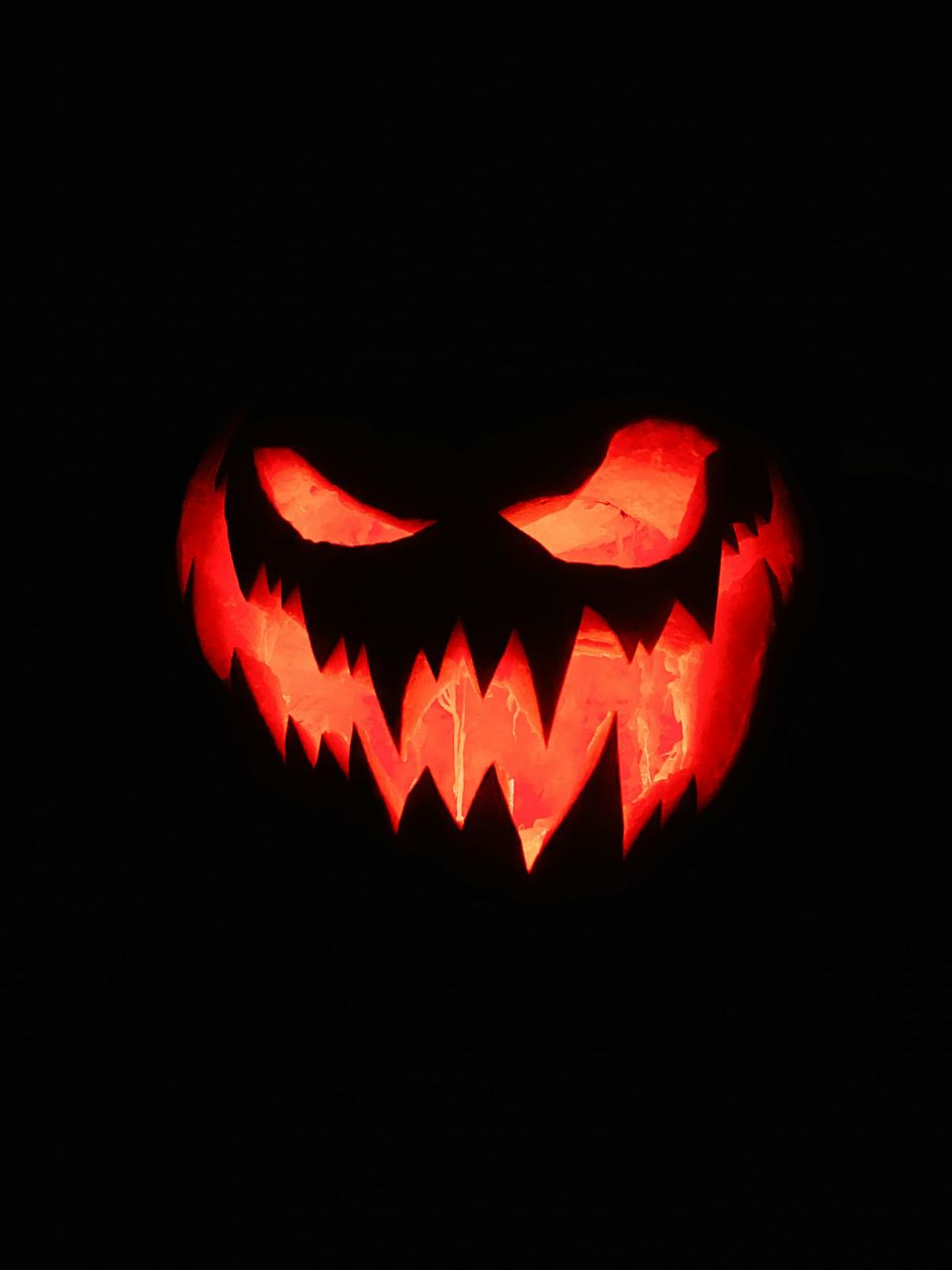
Hello. It's Friday, and I'm (erratically) back. We have now had our first frost, and the mornings are often filled with mist and screaming blue jays. The veil is thinning. The ancestors prepare to visit.
In such a season my ritual thoughts go most to preparations for the November 1st holiday I observe in all senses, which is Calan Gaeaf. However, its secular incarnation of Halloween has also long been dear to me, and I've written about it before. Lately I have observed many things in private about how Halloween functions almost as a children's holistic introduction to seasonal animism, playing out both trickster mischief and outright darker, more difficult things to understand. This has given me a snippet of a post to send you, reflecting on how costumes feature in this scheme of things and what I recall of the ways my mother used to dress me up.
With luck, I can share this small offering with you and then write something longer next week on the holiday's brink.
Guising
As some of you may be aware but as some may not, Halloween costumes do not have a universally agreed upon purpose in their cultural origins, but those origins are probably in Celtic and adjacent cultures wherein regardless of the specific date — it has occurred on Calan Gaeaf/Samhain, but other holidays have also featured across these folk traditions — there have been traditions dating back to at least the Middle Ages of community members or travelers passing from door to door in costume, often of animals or fantastic beings, to entertain residents and seek payment in food and drink. I have referred to this practice in at least one other post as wassailing; but another, more widely used term is mumming, with the practitioners being mummers.
Mumming itself had significant overlap in its heyday with roving theatre troupes, and where the All Hallows class of European holidays is concerned it may have informed or dovetailed with souling, a children's ritual of singing door to door on the Catholic observance of All Souls Day (November 2nd) in exchange for soul cakes, which are not as ominous as they sound.[1] And somewhere between these practices arose the semi-modern practice of children in Ireland and Britain (perhaps primarily the Celtic cultural areas of Britain) that at least in Irish and Scottish communities is referred to as guising. When it comes to guising, everything is combined into something very like what we call trick-or-treating here on Turtle Island: children are the ones in costumes asking for treats, and they do it on All Hallows, the Gregorian New Year, and sometimes other possibilities.
Given this history, we can at least understand the "how" of Halloween costumes, but again, it does not particularly illuminate the "why." In that regard, the most popular opinion I have encountered is that wearing a (dis)guise on a night when the veil is thin would have once served as ritual protection against malicious or ambiguous forces, because those forces could not recognize the person. An alternative to this notion is that dressing as something other than one's normal identity would be a manifestation of carnival dynamics, wherein subversion of the natural order is temporarily performed for regenerative aims.
I approve of either interpretation since they each have their own value. Yet I also feel drawn to a loose feeling that this example of dressing as figures associated often with death, non-human life, or mythic humans — is this not simply an act of relation-making with death, other beings, and myth, through transient identification? And building relation with death would have notable importance in this season.
Of course, I have my biases there, goth that I am. But the work of relation-making would also speak to why some costumes are not fitting for some people to wear on account of a culturally appropriative quality: if you are already not in good relation with someone or something, performing as if you are could not be in worse taste.
Costumes I remember
I did not perfectly avoid poor-taste costumes when I was a child. I remember one year when I wore a simulacrum of what non-Roma imagine a traditional Romani outfit is like. Also, I dressed as "Cleopatra" the year after, which is to say a simulacrum of some Egyptian woman in garb that bore no resemblance to what Queen Cleopatra VII would have worn as a Ptolemaic pharaoh. I would rather be transparent about these examples of ignorance than sweep them under the rug.
I think that those were the only major offenders, though. When I recall the rest of my costumes — such as I can, but I do remember a lot — I can sort them into more benign categories. There were the costumes that made no particular sense insofar as I don't know why my parents chose them in my youngest years: the Jolly Green Giant corporate mascot, a scarecrow, a clown[2]. Then there were the costumes of particular characters who all held significance for me at that time: Peter Pan, a complicated figure if ever there was one but still rather unsurprising for my gender journey[3]; Robin Hood, for whom I almost completely recycled the green tunic and tights, but once again I find it interesting that I chose a male character at that age; in later years I did choose female characters, namely Princess Leia and for better or worse the Star Wars prequels' Padmé Amidala. In my defense on that last point, I was always lukewarm on the movie in which her iconic costumes appeared. My pubescent self just thought the costumes were quite beautiful, and I suppose that's not wrong. I also had the advantage of incredibly thick, long hair that could be used for both Star Wars characters' preposterous hairstyles.
As I grew older and approached the threshold when people typically begin commenting that you seem a little old to still be trick-or-treating, I don't recall exactly when I stopped trick-or-treating, but I wore some kind of costume to classes until I graduated high school. At the time it just felt wrong to be "me" on Halloween. The specific concepts behind the costumes grew simpler, likely because following the divorce my mother no longer had access to the same resources that let her sew lots of things for me; her osteoarthritis was also setting in with a vengeance. But I did have costumes of my own making or repurposing — something witchy, something left over from going to the Renaissance faire, and so on.
By then, the costumes were all quite feminine, which is peculiar since I was in the thick of questioning my gender for the first time. I would say that the whole affair might have been an attempt at pretending I wouldn't rather dress as a man back then. Conversely, given how my wardrobe remained very feminine in general, I think the choices might suggest how my gender struggles were never about clothing, and indeed clothing was one of several factors that pulled me over to the gender I perform nowadays.
My mother's gift
I do not grow nostalgic for any one costume, even for the best ones. Mostly I frustrate myself each year with the awareness that if my burgeoning interest in fiber arts could extend to sewing and tailoring, I could keep wearing costumes of my own making as an adult, because I don't think it just needs to be for children — nonetheless, I still find myself quite hopeless and cowardly about sewing anything, compared to dealing with yarn.
If I have a high standard for myself of what makes a good costume, it's because the costumes my mother made were really good. I would not say that sewing was a passion of hers the way that it was for her own mother; but sewing costumes definitely was. Folk costumes for the folk dance traditions I grew up with, Halloween costumes for Halloween. Some of my favorite childhood memories involve her measuring me, fitting me, and showing me patterns to choose from. She showed me progress step by step, asking for my input on the best way to accomplish a certain look if I had any ideas. I think we engineered my Amidala headdress together.
With the divorce yet to come, I do not think she was very happy in many parts of her life. But I could tell she was happy doing this for me, and I was happy to be dressed up. I don't know if I will ever enjoy such an experience again on the receiving end. Maybe this would explain a kink or two, though.
And now I have a child, and Halloween is coming. Their first costume is a bit irrelevant because their immune system is not ready for going out door to door, but we have a costume picked out for them to wear at home anyway. If there is anything that might motivate me to start sewing competently, maybe it will be the chance to offer my child the same gift that my mother gave me year after year, Halloween after Halloween.
[1] Think of them like the dark half of the year's Christian answer to hot cross buns: https://en.wikipedia.org/wiki/Soul_cake
[2] I have truly never been keen on clowns.
[3] In stage versions of Peter Pan, the actor is usually a woman, so I developed an early association between Peter Pan and transmasculine aesthetics. I suspect I'm not the only queer person in this situation.
Thank you for reading. I'm glad I could return here for the week. If I am able to write next Friday, paid subscribers can look forward to a holiday post for Calan Gaeaf; the week after, I will attempt an Occult-tier post.

Member discussion