Summer Solstice + New Moon: Abundance through complexity
It's Friday, and in two more days this hemisphere will see its longest day on the endless Wheel. Hello.
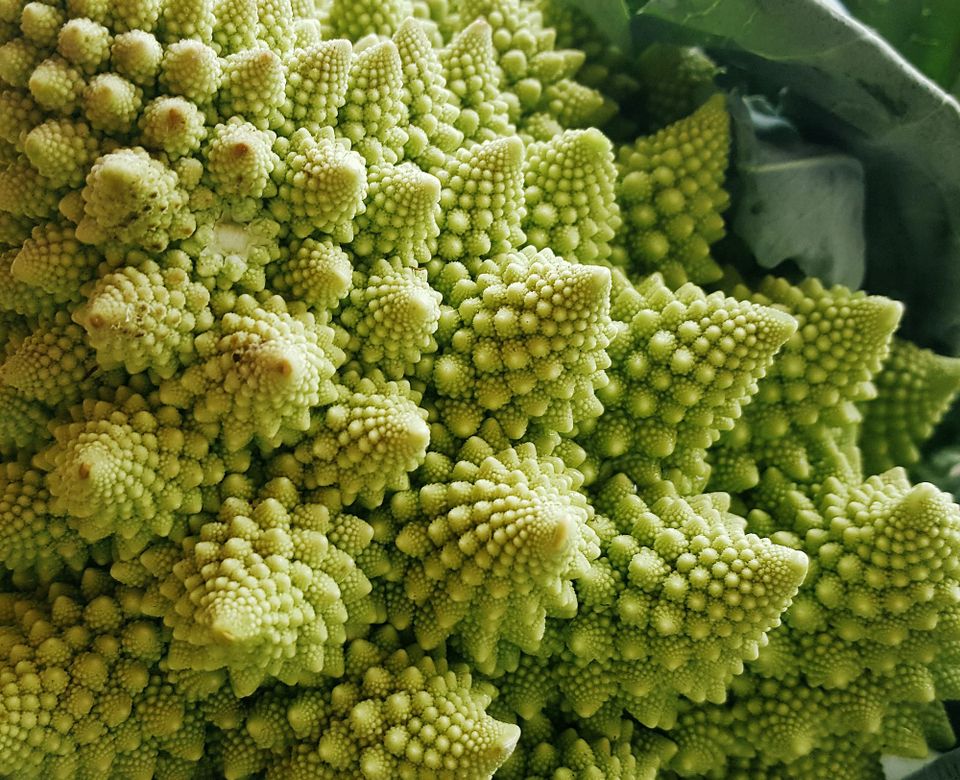
I do not have the mathematical or ecological background to truly do justice to the topic I had in mind for this holiday post, but for a little while I've supposed I should address the topic regardless — at least after a fashion. The topic in question is complex systems theory, sometimes just called complexity theory, though the shorter name is also used for related but different intellectual fields and therefore I should probably avoid it here. To what extent I've grown modestly acquainted with complex systems theory over the last few years, I would say that the ideas explored within it provide a fascinating modern backdoor into what indigenous and/or esoteric knowledge keepers have grasped and taught in more intuitive, mystic frameworks for as long as humans have been humans; I first found this comparison highlighted by Tyson Yunkaporta, and I've since kept dipping my toe into complex systems theory as a source of philosophical language that I, a not-yet-decolonized person, can best and most fairly use to describe certain phenomena to other colonized (sometimes hypercolonized) people, without using phrasing that either belongs to a closed tradition or would sound "too" spiritual.
The grammar and vocabulary of complex systems theory have arisen repeatedly in Salt for the Eclipse, so I would love to explain everything that I understand about the field or at least point you at where to start reading or listening if you'd like to join me in this slow immersion. As the frenzy of summer reaches its peak all around me and promises abundance in its wake, this feels like an especially good time to delve into complexity mysteries, for complex systems and their outputs are seen everywhere right now.
However, after starting, stopping, and restarting this prologue throughout the morning, I've realized that while these mysteries are something I can present and reveal as best I can here in this week of the New Moon, even more than some other mysteries I cannot write very didactically about them. This limitation does not simply derive from how I'm far from an expert in the subject. Rather, there are very few high-profile thinkers in the field whom I would cite without substantial disclaimers, as some of them flirt with the same style of AI doomerism that the Rationalists long ago fell into or at least overlaps with TESCREAL ideologies; not every complexity systems thinker is in that space, and some offer a necessary corrective (see: Yunkaporta as mentioned), but I don't relate to the field in a way where I want to offer many specific citations or push readers toward it without warning. And in the meantime, the further that my body progresses through this nine month transformation, I can still write but increasingly I feel most comfortable in the realms of story, poetry, disordered articulation. It is the Full Moon that shines through me, more than the dark certainty of the New Moon.
I do not know what this means for the newsletter over the remaining months — never mind what I'll be capable of writing after birthing — but at least for this week I have produced the following writing, which flows much more in the way that Occult-tier readers may know from those exclusive posts, although a few hyperlinks are strewn here and there. Happy Litha, or nearly.
Systems
Someone plots each cloud and wind current. Someone maps the fungi tethering all the trees together. Someone diagrams their friends' polycules. You go to the bar with a coworker and spend three hours comparing notes on everything that's scrambled about the company's task delegation, supply chain, development cycle. Inevitably you've both noticed a dozen things that your manager couldn't wrap their head around in a million years.
So far I practice magic best when I act far less often than I observe. To make a change requires extraordinary power and creates extraordinary risk. It will be a sacred accomplishment to avoid casting very much until I've lived at least another twenty years. Until then my rites are only to divine, to revere, to convey, to create what is my given piece in the pattern as I understand it. And to watch. I have been watching which flowers bloom first, which birds migrate last, where the nutrients move, how life turns into death and back again.
The cosmos is in love with itself. A violent, beautiful, unbreakable love.
You hear about the butterfly sometimes. The wing flap over here, the hurricane over there. To understand this relation will teach you nothing. Try instead to comprehend millions of butterflies all flying on their own paths, and then all the other flying insects, and all the birds, and all the bats, and everything that eats the bugs and birds and bats, and everything that feeds them, and how sunlight plays upon the earth, and how water moves between the above and the below, and then not only of all the hurricanes that may be formed, but all of the hurricanes that never come to pass.
The ads say the latest machine knows everything, but what does it know about all of the species that have never been given settler names? All the species that have never even been seen by our eyes, living in the holy black ocean depths?
A good writer once wrote a story where a painter spent an inordinate amount of effort filling in the details of every leaf of a single tree, and then the painter found he needed to do the same for all the other leaves in the forest surrounding the tree, and everything he painted became some greater context for the same image, all expanding outward. But it was never complete. He could never catalogue the whole scene himself, because he never had enough time in his day. Eventually when the rest of his life forced him to give up the work, the painting happened to get destroyed except for a single remaining leaf that was placed in a museum but could not possibly encapsulate all the effort that the painter spent. But the painter also came to discover a land that had the same tree and forest he had been trying to paint all along, and he and a friend worked together to make that land even more beautiful than it already was, and they traveled to places in the land that the painter could never have shown from his flat canvas.
If I could spend a day as an eagle, it would not be to fly, but to see with a detail my eyes cannot process. However, I would find little value in such sight if I could not make any sense of it with my human mind. To view with such precision, over and over, thing after thing, would this drive us mad? Or would it just make us pettier than ever before? What sense does an eagle make of everything they behold? Is an eagle calm in their flight because they understand all that's beneath them, or are they calm simply because they know what information they need to focus on to hunt, the rest being meaningless?
When I last had work that paid me every week, I was on the team of people who had to weave an awareness of many other people's work together and present that knowledge to the users of our product, and we also had to monitor how the users were using things and explain their patterns periodically to any number of people on the project who might have fancied themselves strategists, tacticians, or otherwise the shapers and interpreters of "what was needed." It was difficult for my teammates and I to efficiently distill all the layers of what was actually occurring, where the real causes and effects lay, what the dependencies and feedback loops constituted. We were the only ones living the reality of "the purpose of a system is what it does" because we were seeing what the system did day in, day out. The others were only thinking about what the system should do, so they could not fully see the real doings unless they stopped their own work to instead perform ours, or to listen as we spoke for days and days. My team, of course, had the work that nobody else ever wanted to do or hear about because it wasn't "important." We were paid far less than everyone else. We were also some of the only people on the project who were or were seen as female.
They say there is no ethical consumption under capitalism, and this is true, but there are more or less ethical options, and some of these can be debated, but the real challenge to determining the more ethical approach has nothing to do with what's "fair" to judge a product-maker about. Instead, the problem is that supply chains are so bafflingly complicated and interdependent, it's virtually impossible to map every single step that a product must go through before it becomes itself. That fair trade, environmentally certified chocolate just means certain criteria were fulfilled in the sourcing of the cacao beans that were processed into chocolate. Assuming those criteria were completely foolproof, would the same chocolate seem just as ethical if we could obtain information about the paper and metal foil used to wrap it? About the working conditions not only where the chocolate is processed and wrapped, but likewise in its sales departments, or in the shipping services that deliver the chocolate to retail stores? About the software that the company uses to track its operations? About the minerals forming the circuitry that the software has to run on?
I ask these questions not to make any point (not today) about why the chocolate should or shouldn't still be bought, nor about the ethics of eating any chocolate. I am asking a meta-question: how many layers to the situation can we examine, must we examine, before we are no longer talking about the ethics of chocolate and instead about the ethics of something entirely different, or much larger?
A choice I made near the end of my first year of university led me to become acquainted with a group of people through whom I eventually met the young woman who would abuse me emotionally, financially, and sexually between my junior and senior years and briefly after graduating. The circumstances I endured while living with her would play a significant role in why I did not finish my studies with the grade point average that I would have probably maintained before meeting her, why I did not get into any graduate programs to which I applied, why I wound up living in a particular metropolitan area for nine years, and why I ultimately lost touch with most university friends — having been separated from some of them at a critical time, and seeing in the rest of them an upsetting reminder of what I never got to have. There were of course also lasting consequences for my mental health, which I've lately discovered had to re-re-reprocess in therapy.
But the same choice that produced all these effects, the same group of people through whom I met my abuser — this was also how I met the young man who would consensually become my owner, whom I would marry, and through this relationship I would find what I needed to explore many more nuances to my gender and even become a sworn witch. Related connections were also how I got to do theatre again for a few years as an adult, and by being in the city I moved to I also became immersed in that particular local kink scene, through which I've forged many incredible friendships and a crucial support network. Even some potential career opportunities going forward.
On the whole, the eco crisis significantly involves global heating that is making more and more latitudes too warm to support the flows of life that have taken place there for untold millennia, especially human life. But if temperatures rise enough and lead to the right cascading effects over this next century, the AMOC (Atlantic meridional overtuning circulation) ocean current system may collapse, which would rapidly make some parts of the globe catastrophically cold instead.
When I think about how the number of permissible board arrangements in go exceeds the estimated number of atoms in the known universe, it makes me wonder the same thing about the number of connections that exist between a human brain's tens of millions of neurons, or the number of possible allele combinations in a single human's DNA, or the maximum number of meaningful statements in all known languages.
My first mystical experience was my first and so far only spontaneous, sober vision, at age fourteen, when a long and fervent meditation led me to see golden, glowing cords of light reaching between my chest and everything in my room, and everything beyond my room, and in between all the things that were not me, an utterly dizzying but euphoric network. If that's the only such vision I ever have, at least it's perhaps the only one I will ever need.
Thank you for reading and for bearing with this newsletter as it potentially evolves. Next week I'll be sharing some more thoughts on ancestral Cymric food, and the following week I'll have a post for paid subscribers only about summer constellations.


Member discussion