Last Quarter: The settler's dilemma in the age of apocalypse
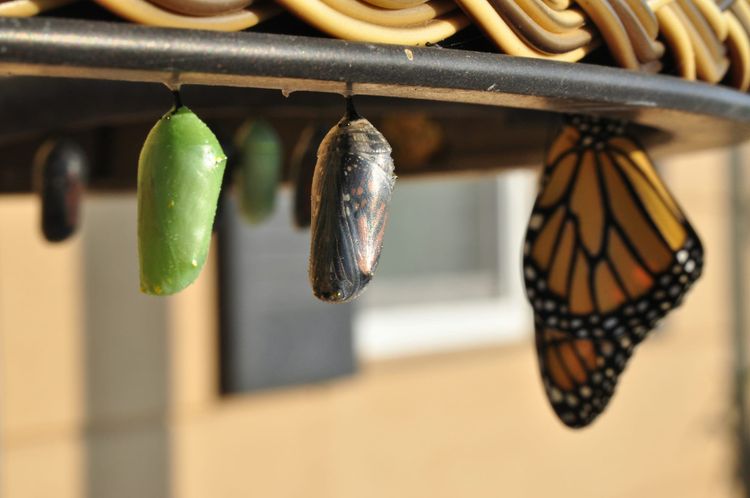
Hello. It's Friday, and recently my household has harvested our garlic, tamed unruly cucumber vines, watched tomato fruits growing, watched our first attempt at jalapeños start to take off in the heat, and watched our first attempt at potatoes finish producing flowers. In the recently tidied and expanded herb garden, our chives, tarragon, catnip, common sage, spearmint, thyme, lemon balm, marjoram, oregano, and lavender are all faring pretty well, while some parsley is struggling a bit (but will hopefully pull through) and we are still waiting for some late-sown dill and summer savory to germinate. Our main flower bed is blooming with daylilies, coneflowers, and some things that other people would pull up like great mullein or wild carrot (Queen Anne's lace). Meanwhile, one invasive arrival that we've had to keep an eye on around this plot of land is garlic mustard, which must be uprooted diligently; I've also finally figured out we have St. John's wort here, which is semi-naturalized but can definitely act invasively so I should probably pull it up and do something with it. Our meadow-fying lawn has also gone through a milkweed bloom, and we just saw a monarch butterfly laying her eggs on some of those plants.
What is the key thing in common between these plants? That they are not in common. Or more precisely, that they have only managed to grow here in common through colonization and globalization. Specimens like our garlic, cucumbers, herbs, and daylilies are Eurasian plants now cultivated on Turtle Island by settler consensus. Mullein, wild carrot, garlic mustard, and St. John's wort do not usually grow here by that same consensus these days, but they did cross over here from Europe either by accident or on purpose. By contrast, tomatoes, chili pepper cultivars, and potatoes do belong to this hemisphere; however, they were not historically a part of my ecoregion's ethnobotanical profile, not until settler farming practices picked up those plants from their native lands further southwest. Coneflowers and milkweed are genuine native perennials here, though. My owner and I are slowly working on planting others.
There is a fine line to walk in determining which non-native plant species are too damaging to their surroundings to be worth growing — and in turn, how much the practices of gardening or farming provide an opportunity for land-disconnected people to re-foster such connection, versus yet another means for settler logic to impose itself upon the land and harm it. There is also a conversation that more qualified voices than my own have been having for years about how backyard gardening or homesteading projects in the imperial United States all too often remain inaccessible to Black, immigrant, and/or indigenous people because of structurally discriminatory statutes, those statutes' implementation, overall economic disparity, and land theft. I'm not the right person to join that specific dialogue; but writing as a settler who is white-classified and has been actively attempting to unlearn that whiteness as part of the struggle against eco-apocalypse and colonial genocides, today's newsletter is for other people in my situation who may feel troubled as I once was — and still am, but less so — by the problem illustrated by plant species that were introduced violently and without care for their ecological impact. This problem is the seemingly insurmountable obstacle of how to live in right relation with a landscape that very much was not "made for you and me," and what that relation is supposed to look like since it should clearly be more than white guilt or fetishization of Otherness.
The following thoughts are my own articulation, but besides emphasizing how I endeavor to speak settler-to-settler rather than make any universalist statements about what human connection with land "inherently" looks like — for which I am also not qualified — I need to offer a few other disclaimers such as:
- These thoughts are constantly evolving, so the writing of them will be imperfect. In addition to welcoming criticism, I want any reader to recognize that your takeaway cannot be how I, Fey, am a genius with all of the answers. I may well write about this subject again in the future and say some different things than what I say today.
- The underlying ideas for these thoughts come from a blend of reading, videos, and direct instruction by indigenous, Black, and white writers or educators alike. I will include some recommended reading and viewing at the end of this essay.
- I encountered the underlying ideas only within the last few years as a natural progression of decolonial/anti-racist education, so I consider myself inexperienced in how to present them; I am only trying to do so in more spaces these days because my very limited awakenings have left me with the sense of at least grasping certain things that many other settlers even with left-liberationist mindsets seem to have not yet understood. I have recently presented on this subject in a space besides this one because I feel obligated to pass along what education I can, both because it may take some burden from colonialism's and white supremacism's primary targets and because our global planetary systems do not have time, crudely put, for white settlers to individually pull our heads out of our asses as a wholly private, introverted process. I, and you, do not have time to "work on our shit" alone. Collective learning accelerates practice.
- Simultaneously, nothing in today's essay is a sufficient substitute for indigenous knowledge from indigenous teachers, nor does writing or reading the essay provide inherent material support for indigenous communities.
But now, for those of you to whom this writing may be relevant, I will start by explaining the problem ensnaring too many of us.
A dilemma; indeed, the dilemma
The dilemma to quite literally end all other dilemmas — because of the consequences if we fail, which are already emerging around us.
I have operated in left-wing spaces of some flavor for most of my adult life, whether these spaces have performed intentional political action or have just been primarily composed of people who express and ideally abide by leftist values. Some of those spaces have been more radical than others; not everyone pays more than lip service, while some people get hung up on idolizing flawed political leaders or nation-states, and some people fail to interrogate their own beliefs around carceral justice or to recognize that decolonization is not a metaphor. Unfortunately, sometimes when people talk about uplifting marginalized populations, they really just mean the populations they belong to, and there are likewise outright grifters who move in these circles, as well as innumerable people who are too traumatized to function socially — never mind in an activist capacity — and keep trying painfully hard to put the cart before the horse when it comes to their own survival.
But even with these critiques, I am still fundamentally of the left: an eco-anarchist prioritizing radical direct action for the working class and the more-than-human world, with such action taking many forms, and with attention paid to a) the overlapping hierarchies imposed upon the working class to divide and conquer us, and b) the extractive, imperial mechanics of any centralized power, even preceding capitalism. In tandem with these politics of mine, I am also a witch whose cosmology and practices are built significantly upon an ecocentric worldview and an authentic relationship to ancestral traditions. And around the time that the covid pandemic began, I had become more committed to my rites than ever before, but I was in particular despair about the eco crisis, extremely cynical about how to effect sociopolitical change in an online and accelerationist era[1], and especially bitter about how a common theme between these problems seemed to always be that white-dominated and -operated spaces, political and ritual alike, were wrapped in a navelgazing circle jerk that itself has become so cliché that it's another cliché to even complain about it. On Turtle Island we white settlers know that it is Bad™ to not act in an Enlightened™ way toward people whom we perceive as part of the BIPOC umbrella, but the general trend is that we also do not know how to actually behave in an enlightened way toward "those" people, perpetually sliding into uncomfortably dancing around their specific presence or experiences, or obsessively putting them on a pedestal and trying to passively "become" them, and so on. And then we sit and wonder why xyz group we're in is all white, and we decide we need more education, and we do the education and the cycle repeats.
Now, this originates partly in how anti-racist education — regardless of who offers it — has too often made foundational errors influenced by (Calvinist Protestant) Christian morality. And even when the education does not make those errors, many white settlers who nominally listen still bring that morality to the table. This morality demands flawless purity and the centering of a journey undertaken by the individual self. Thus in examining any trace of a racist, colonialist worldview in our beliefs, words, or deeds, the goal becomes to excise that worldview for our own self-improvement rather than in the spirit of solidarity with other people. As a result, white settlers who seek to "do better" merely achieve one of two distorted extremes:
- The belief that you (I, we) are so irredeemably incapable of acting in an Enlightened™ way, and therefore you (I, we) will never be ready to act as meaningful allies in struggle, which implicitly suggests you (I, we) should arrest our process of deracialization and decolonization just at the threshold of knowing what we can't and shouldn't do, never actually doing anything.
- The belief that you (I, we) have so perfectly executed this journey of Enlightenment™ that you (I, we) are now an expert on all matters of race and colonization, so other white settlers must listen to what you (I, we) have to say about it and you (I, we) have, in a way, "graduated" from white settler status even though you (I, we) are very careful to remember to mention how white and settlery you (I, we) remain. You (I, we) are also immune to criticism from indigenous, Black, or other voices of color.
But we have not just painted ourselves into this corner through foolishness or through the monetized and burgeoning anti-oppression training industrial complex.[2] Truthfully: the dilemma to end all other dilemmas, the settler's dilemma, is a material problem that has evolved through historical conditions. I started to confront this more directly as I sat in my pandemic malaise, pondering the intersection between my self-developed religion, my rejection of industrial capitalism, my recognition of the growing apocalypse, and my pride about belonging to specific ethnicities contrasting with my virulent disinterest in "being" white[3] — how could I make all of these beliefs and feelings work together toward the benefit of all humans and all species? I knew they did go together in theory, but I had to admit I was so afraid of veering into one of the two extremes outlined above, I'd wrongly allowed myself to retreat into a permutation of #1: despite knowing better than to drown in white guilt, dealing with that discursive environment felt too tiresome and pointless to let myself enter any more spaces where racism or colonialism might come up.
This would not exactly help me in any of the political work I still wanted to do, since in all leftist politics these harmful systems must come up, and in ecological work it must especially be confronted through the lens of indigenous land rights and custodianship. On a ritual level, too, I could not learn things like bioregional plant medicine if I was unable to engage with indigenous ethnobotany, and it would certainly have been hard to engage with that if I shrunk from actively participating in discourse around indigenous experience in general. And to be clear, it's not that I had never done any relevant learning before or that I had never been interested in how to act in solidarity with indigenous-led initiatives; though raised in a very white- and settler-privileged way and in a part of the continent where white infrastructure is desperate to pretend indigenous people were "wiped out," throughout grade school and university I had proactively sought out accurate information about all kinds of issues that affected past and present tribes, trying the best I could to verbally push back against narratives of vanishing indigeneity and white people claiming indigenous heritage.[4] But that kind of thing is so utterly basic; it does not engender any notable ability to treat real indigenous people in a normal, non-mystifying fashion, nor to meet indigenous people in the places where they currently live and the trenches where they're currently fighting.
And to develop that ability — to fully remove my ego from the equation, listen for what indigenous voices are actively requesting, and do whatever that work involves whether it requires finding indigenous people right near me or not — I was quite stuck. So I looked for new voices to read and listen to, and the most helpful examples are what I will list at the end of this post. If you have found yourself in the position I was once in, I would really recommend just diving in to what's listed, but I have written my own interpretation of such material here because for better or worse lots of people are less overwhelmed by a summarized introduction of something before they dare to venture further; and in turn, just as white settlers often listen to each other more willingly, you may especially feel "safer" reading thoughts of this kind first from someone you know or have read for a while.
Here is what over the past several years I have personally started to understand a bit better about what the dilemma really is and what work we really need to be doing.
The dilemma, historically reframed
Empires have risen and fallen for thousands of years, and any empire sustains itself through extracting resources from an outer realm in order to elevate a central realm. This can look like the urban extracting from the rural, or the ruling class of a whole geographic area extracting from colonies in other areas, or a combination of these things. In order to best perform this extraction, the actual inhabitants of the targeted landscapes are systematically severed from their own relationships to those lands, so that they cannot interfere with what the imperial power intends. What this severance looks like can take many forms: people being directly murdered en masse through war and genocide; people dying from disease, starvation, and other atrocities; people being forcibly relocated and prevented from accessing the targeted landscape any further, sometimes with the relocated people being trafficked as slaves to landscapes utterly foreign to them; people being forced to pay or go through laborious processes in order to use their own land on a limited basis; forced cultural assimilation of the people on the targeted landscape, such that their values and interests ideally align with the extraction goals of the empire, or if they do not align then the people have at least lost all motivation to resist violence done to their landscape because they no longer understand it as "theirs" or that there is even a "them" they belong to.
This has happened throughout history, repeatedly. What we are currently living through is the simply the aftermath of some long-term events by which formerly indigenous peoples of Europe were imperially exploited and colonized from within Europe itself; they (we) have made their (our) compounded traumas and land disconnection into the entire planet's problem. And I tend to believe that the first of these traumas started with the Roman Empire.
Rome was the first clear empire to colonize indigenous European peoples and pressure them to adopt imperial culture and deities in a widespread fashion. Now of course, life in the Roman Empire still very much tended to involve close land connection; after all, even the patrician class and urban communities maintained religious rites that accounted for the seasons, given the agrarian lifestyle that everyone relied on. Nonetheless, this imperial land connection was inherently extractive, not only relying on slave labor but also continuously expanding the scope of the lands whose resources were taken for Rome. This extraction meant discouraging the so-called "barbarians" in Gaul, Britannia, Iberia, etc. from resisting. The civil liberties afforded by Roman citizenship were a powerful temptation. But the price of that citizenship was homogeneity, losing one's indigenous customs or the names and stories of one's local deities and spirits.
Following the empire's collapse, some people in Europe continued practicing pre-Roman ways, especially in places like Scandinavia that Rome never conquered. But as Christianity gained power in Rome, this led to the suppression of polytheism in the empire, alongside Rome's existing vindictive attitude toward Jews. And even as Rome fell apart as a political entity, the Church essentially took its place in Europe as a hegemonic force. Parts of the old empire that had not fully converted now increasingly did convert, and the Church sent missionaries beyond the old empire's boundaries as well. Contrary to Christian propaganda and modern secular consensus, this doesn't mean everyone in Europe had now already abandoned some kind of polytheism; but it becomes hard to find much record of any clear, uninterrupted pre-Christian spiritual practices. What scholarship does find are practices either fused with Christianity or stripped of prior context. Most people keeping these ways were probably very marginal and rural; the more urban and "sophisticated" someone was, the more it seemed valuable to become a Christian or at least go through the motions. After all, a pagan is synonymous with a country-dweller. And eventually in the later Middle Ages we find more widespread fears of witchcraft emerging, although persecutions were rare, and when they did happen they were frequently entangled with antisemitism.
By the time of the Reformation, Protestantism created a unique pressure to reject the material world as "ungodly" and instead focus on an inward-oriented, psychological purity that encourages not just faith over good works but also individualism over relationships. This attitude overlapped with the scientific Enlightenment, which was simply another method of severing and de-sacralizing the material world. As usual, I wish to reiterate that science is a meaningful discipline and it can share equal weight with older knowledge systems. But another wound was dealt to European land connectedness by religious and secular movements that removed animacy from the material world.
This development went hand in hand with capitalism and landlordism. Technically there is a whole separate discussion to be had about the role that the Black Death played in both traumatizing the medieval European population and then allowing for these economic evolutions to occur, but since some of what I could say there is more speculative, for purposes of this essay let me assert what we know for sure: by the 1500s, the feudal system was giving way to early capitalism, whose underlying ideology demanded that not only could land be treated as property, but its resources (and people, and basically everything on the Earth) ought to be extracted in their utmost so as to maximize personal monetary gain. Not a new attitude when you look back to empires past, but here the extractivist philosophy assumed a new form that could operate outside of official state structures or religious institutions, and this would in turn remake what those structures and institutions even looked like. This also profoundly damaged land connectedness by completing the transformation of the sacred landscape into an instrumental commodity; as commonly held land became subject to enclosure over the next century or two, people in Europe had less and less means to actually stay connected to land. Even if they still managed to live off of it, they usually neither owned it nor had the same relationship to it that serfs did.[5] And if you didn't work the land, there was less and less of it available for you to freely explore without facing legal penalties.
All the groundwork was now laid for Eurocolonial expansion. To compensate for what had been lost, increasing numbers of Euro-descended peoples began to willingly live on land that they directly stole from other peoples. For the native occupants of those lands, local disruption of indigeneity was started or accelerated by the colonizers' presence, while some peoples (i.e. in western Africa) were outright stolen from their land and trafficked to other places for slave labor. All of this is the more recent series of tragedies and atrocities, but white settlers find themselves (ourselves) chronically unable to apologize or make reparations for what they (we) have done in that regard, because so many carry ancestral traumas that have gone unaddressed; it is the prime example of using your own pain as an excuse to hurt other people. The colonists who fought for independence from the United Kingdom in the 1770s-1780s were often virulently invested in slavery and/or removing every trace of indigenous denizens of the landscape because they saw it as essentially their turn to be the ones on top, to be the landholders. After so many generations of dispossession, they and their recent ancestors had come to this coastline with very reasonable bitterness toward the powers that be in England; but this bitterness was weaponized against absolutely everyone who was not in the settler class, and the racial hierarchies that had been developing in Anglo-European proto-science now also achieved their modern form in the elevation of white settlers as the "right" kind of migrant to these shores, contrasted with everybody else, including the land's original custodians.
The Industrial Revolution then really became the next-to-last nail in the coffin of land connectedness — ultimately for most people on the planet, but especially for white settlers who had already been primed by millennia of prior disruption. Mechanized production or facilitation of so many goods and services have over the past couple centuries increasingly taken humans, and especially those in the settler class, away from any reason to interface with the landscape at all, unless we can treat it as a resource to extract or as an annoying intrusion. There has been a near total severance of land connection, along with a loss of old seasonal, cyclical, Sun-dependent timekeeping in favor of linear wage-oriented timekeeping along an entropic path of permanent growth.
But I only refer to industrialization as the "next-to-last" nail in the coffin because in addition to many indigenous communities still existing around the planet — and in addition to the settler vs. indigenous dichotomy being less cut and dry in locales where cultural colonization has occurred but there are large populations of "Westernized" people whose ancestors still lived there since time immemorial — every human being is still capable of land connection as an ancestral birthright. For white settlers it is just absolutely critical to recognize this historical progression together when reclaiming that birthright, because historical misinformation about what was stolen from us — all of us — typically turns into white nationalist propaganda.
Here is the real settler's dilemma in light of all this context, then:
- I, the settler, currently benefit and have ancestors who benefited from the disruption of other cultures' land connection, and I live on stolen land. BUT ALSO —
- I, the settler, continue to live with my own familial, intergenerational trauma of landlessness, and I cannot easily reclaim my relationship to the land that was stolen from my ancestors because that is not the land I'm living on.
The second prong of this dilemma is less applicable to settlers whose families have always historically tended to belong to the ruling class, and I would say those settlers' identities as such are less meaningful than their identities as oligarchs, monarchs, aristocrats, and so on. But most of us who are settlers do not have that particular background; there is at least some degree of working class landlessness that we've inherited. And in that position, undoing the cycle of extractive violence is necessary but difficult. We cannot all find and bond with local indigenous communities, and we certainly cannot magically "re-indigenize" ourselves.
My own experience as the descendant of mid-20th century Cymric immigrants and late 17th century French colonizers does not even begin to speak to the pain of belonging to a culture whose land connection has been disrupted more recently.[6] But at some point no amount of neoliberal feel-good anti-oppression workshops can answer this question for we settlers:
How do we connect to the land again? Is it possible? Which land is the "right" one to even connect with?
The work
This is where I have less answers. I could not ever claim enough expertise to know anything for certain, and I am plodding so deliberately through the work ahead of me that I know even a shred of expertise is still very, very far away.
But the work does need doing, and this is how I would describe the way it looks to me.
The invitation to reconnect with land has come from the Earth itself and from many, many traditional custodians across the Earth's surface. It has never been more necessary to realign ourselves toward the land in this time when the ecological crisis is not only growing worse by the day through older technologies but also through the new pollution and wastefulness brought about by the computing needs of that phenomenal abstraction referred to as “AI,” which has been shipped to us by billionaires as the most advanced means yet of disconnecting from all things organic, allowing these oligarchs to fulfill their dream of even colonizing the stars and extracting resources from other planets instead of forming meaningful relationships with them, either.
When those of us who have benefited from white supremacism and colonialism[7] are told to decolonize our minds, we're often told to listen to indigenous voices. What are those voices actually saying?
Indigenous peoples are not a monolith, but a reoccurring theme from various indigenous activists and thinkers is for us to not to avoid engagement with the land we're on, and rather to…
- Connect with our own ancestors but also form strong land relations wherever we live
- Creolize ourselves and naturalize harmoniously with our ecosystems
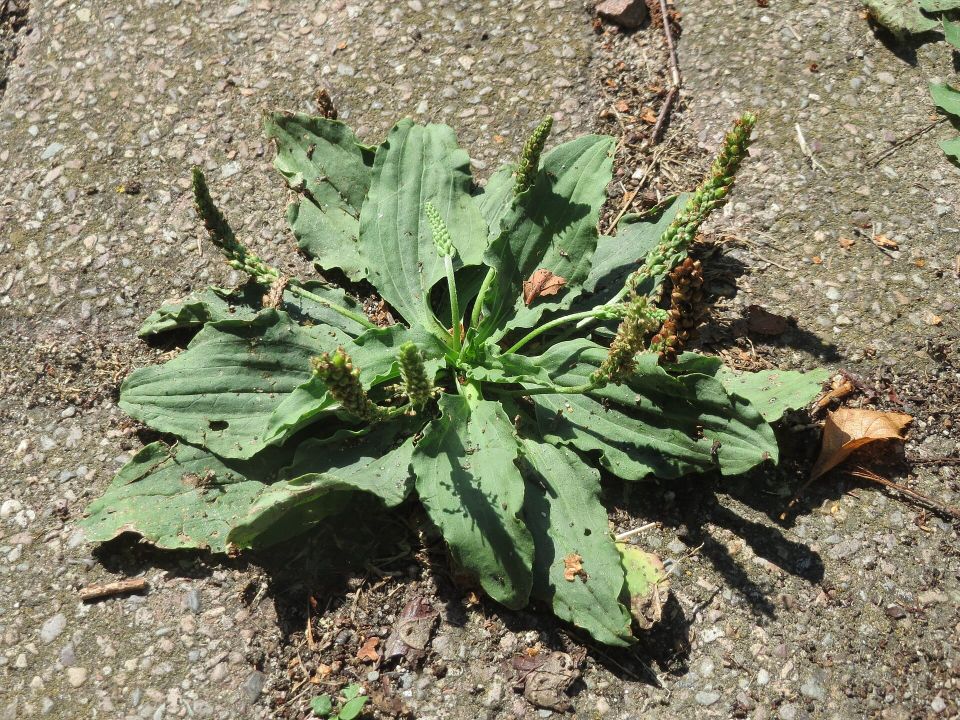
One of my favorite explanations of this can be found Robin Wall Kimmerer's seminal Braiding Sweetgrass. She's writing about a so-called "weed" that grows in many places, called plantain. Not the banana relative — rather, the European plantain. Because it arrived on Turtle Island through colonization and spread prolifically, Kimmerer explains how a common indigenous nickname for the plant used to be "White Man's Footstep," but the plant is not invasive. As she puts it:
Foreign invaders like loosestrife, kudzu, and cheat grass have the colonizing habit of taking over others' homes and growing without regard to limits. But Plantain is not like that. Its strategy was to be useful, to fit into small places, to coexist with others around the dooryard, to heal wounds. Plantain is not Indigenous but 'naturalized.' Maybe the task assigned to Second Man is to unlearn the model of kudzu and follow the teachings of White Man's Footstep.
("Second Man" here essentially refers to settlers.)
This passage affected me very deeply when I first read it, and I know it seems to affect other people with my background when they encounter it; my friend Rebecca Beyer has referenced the passage in her own writing on practicing bioregional herbalism as a Euro-descended witch, and this morning before starting to write I was literally just watching a video interview about settler land connection practices where the interviewee, Prof. Sara Axtell (University of Minnesota), brought up the exact same passage.
Over the past few years, I have been trying essentially to learn from the plantain. So far what I sense is that this involves recognizing and celebrating my ancestry, but not trying to graft it onto the landscape I'm living on. It involves digging through the past for things to reclaim, but acknowledging both the geographic separation and the need for practicing something slightly different in the here-and-now. It involves learning the magic of plants that evolved here alongside the magic of plants that didn't, and using good judgment about plants that really ought to be removed because they can't play nicely. It involves not trying to revere or assume I know anything about the culturally specific spirits of the place where I live, but still trying to listen for anything they do try to tell me. It involves acknowledging I "am" white when it comes to certain material effects, but refusing to accept homogenization with other white-classified people. It involves admitting that whiteness itself is an anti-culture, but refusing to passively belong to an anti-culture. It involves respecting boundaries around closed ritual work, while still taking opportunities to immerse myself in whatever ritual work is open.
It involves genuinely not worrying about whether I'm being a good enough "ally," or being "good" at all. Instead of worrying about those things, I just try to be on the lookout for contexts where the land around me needs active protection; and if indigenous leadership is already present on that matter, I hope I can effectively show up and just ask what they need; and if there is not yet clear indigenous presence, I hope I can step up and act in the best relation possible, but specifically with the aim of transferring leadership to the land's traditional custodians in a prompt and respectful manner.
This is not about being anything. It is about doing things. Finding what needs doing. Doing it. Not thinking beyond it. That is even the nature of animism itself: the ritual precedes the belief.
Recommended reading, listening, or viewing
There are some key theorists I am not including here because although it's very reasonable to read someone like Edward Said for a baseline understanding of colonialism, I'm working from the assumption that readers of this particular post already have the baseline understanding and need something that is more praxis-oriented (and preferably less dense than a lot of academic texts tend to be).
- Braiding Sweetgrass, Robin Wall Kimmerer (Citizen Potawatomi Nation). Buy here.
- "Reclaiming our Indigenous European roots," Lyla June Johnston (Diné, Tsétsêhéstâhese, Cymric). Read here.[8]
- Anything by Katrina Messenger (Black, Tsalagi, Irish). Read some things here.
- Sand Talk, Tyson Yunkaporta (Wik) or his later writings and podcast. Book. Podcast.
- "Roots Deeper Than Whiteness," David Dean (Euro-descended). Read here.
- Nordic Animism channel, Rune Hjarnø Rasmussen (Danish). Watch. (Most recent video is the interview I referenced in this post.)
If you delve into any of this, or if you have some resources of your own to share, let me know and let's talk more. We will work harder and faster together.
[1] Note that I am not an accelerationist, since I oppose making anything in the world worse on purpose, and I think anyone who supports that even for leftist reasons is a dupe. But if the entirety of Salt for the Eclipse did not make clear, I am quite pessimistic about how much worse things are about to get for a long time, and in that regard my quibble with accelerationism is just that it erroneously assumes humans can bother to move forward a collapse that's already been snowballing for decades and can systemically make itself worse without anyone deliberately doing anything; all it takes is the ecosocial inaction that's already occurred.
[2] Admittedly this complex is burgeoning less than it was a decade ago, because under the present regime's downward spiraling imperial crackdown it's much more lucrative to backpedal and say, "Oh, we're terribly sorry about all that 'woke' stuff. Ha! Carry on."
[3] While accepting that I am categorized structurally as white and I benefit accordingly.
[4] I could not tell you why — the instinct was just there.
[5] Serfdom was not an idyllic way to live, which is one major reason why I do not advocate for a return to feudal economics. Serfs were very much exploited and used as extractivist tools to serve centralized local powers. However, I still think we need to remember that we didn't really trade "up" by transitioning from serfs to wage workers. In trading our labor to the highest bidder, wherever they were, we increasingly lost a day-in, day-out relationship with a particular place where our ancestors had also lived.
[6] I have also not dealt adequately with the Ashkenazi portion of my heritage, in which landlessness has repeatedly occurred due to cultural and religious persecution; the parallel settler colonial project that has evolved from this is Zionism.
[7] Even when those things have also harmed us.
[8] Caveat: I am including this very important piece despite the fact that it cites common misinformation around how many people were killed in European witch persecutions.
Thank you for reading, if this was relevant to you. I will probably keep it as a featured article on the newsletter's main page for a long time, because the logic contained here is rather intrinsic to most other things I write about, even though I try not to center my writing too squarely on decolonial matters because at the end of the day I remain just a student thereof.
On that note, next week I will be looking at the underlying psychology and ritual function of sadism and masochism; and the week after that I'll have a meditation on the Old English herbalist reference known as the Nine Herbs Charm.

Member discussion